Sarumaru Shrine
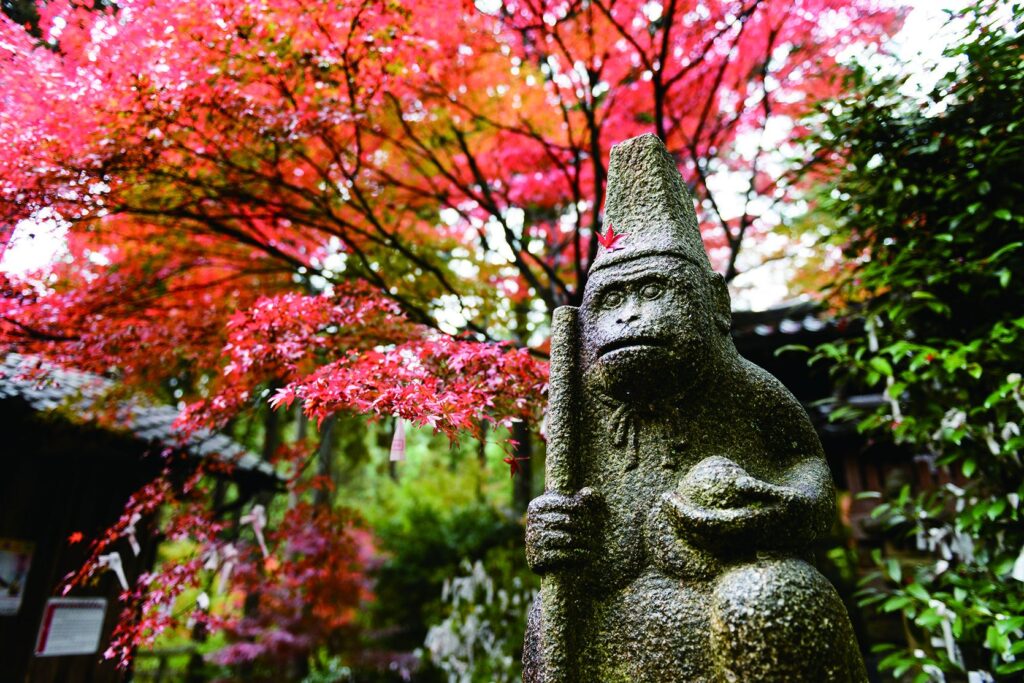
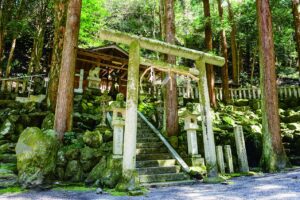
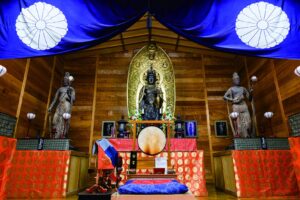
Located near the Zendōji Pass, on the border between Honmachi and Sotome-chō in Ōtsu City, this shrine enshrines Sarumaru-daiyū. Although Sarumaru-daiyu is known as one of the Thirty-Six Immortal Poets, a poem attributed to him—listed in the *Kokin Wakashū* as “Anonymous” and reading, “When I hear the cry of a deer as it pushes through the autumn leaves in the deep mountains, that is when autumn feels most poignant”—is said to have been composed by Sarumaru-daiyu. This deity is renowned for his miraculous powers in curing growths such as lumps, and the shrine attracts many worshippers from various regions, including the Kyoto-Osaka-Kobe area.
A monthly festival is held on the 13th of every month, and grand festivals are held in spring (April 13) and fall (September 13). Additionally, on June 13 and December 13, the “Bonfire Ritual” takes place, drawing crowds of worshippers and spectators. The shrine grounds are a hidden gem for maple leaves. The leaves gradually change color starting in November, offering a magnificent display of autumn foliage that perfectly captures the spirit of the poem: “When I hear the cry of a deer parting the crimson leaves deep in the mountains, that is when I feel the poignancy of autumn.”
Located near the Zendōji Pass, on the border between Honmachi and Sotsukamachi in Ōtsu City, this shrine enshrines Sarumaru Daihō. Although Sarumaru-daiyu is known as one of the Thirty-Six Immortal Poets, a poem attributed to him appears in the *Kokin Wakashū* under “Author Unknown”: “When I hear the cry of a deer as it parts the autumn leaves in the deep mountains, I realize how sorrowful autumn is.” According to his biography, “Sumiyoshi Sarumaru-daiyu traveled upstream along the Tagami River in Kurita District, Ōmi Province; passing through the neighboring village of Odawara, he ascended westward along a mountain pass at the northern foot of Mount Sarumaru. There, he is said to have admired the exquisite scenery—marked by strange rocks— and marveled at the exquisite scenery, so people call this rock ‘Sarumaru-daiyu’s Seating Stone.’ “In the past, boundary disputes frequently arose between Ōishi-Sotsu and Zendō-ji, so the shrine hall was relocated to its current site,” the biography states. This deity is renowned for its miraculous powers in curing growths such as tumors, attracting numerous worshippers from various regions, including the Kyoto-Osaka-Kobe area.
A monthly festival is held on the 13th of every month, and grand festivals are held in spring (April 13) and fall (September 13). Additionally, on June 13 and December 13, the “Fire-Burning Ritual” takes place, drawing crowds of worshippers and spectators. The shrine grounds are a hidden gem for maple leaves. The leaves gradually change color starting in November, offering a spectacular display of autumn foliage that perfectly captures the spirit of the poem: “When I hear the cry of a deer wading through the autumn leaves in the deep mountains, that is when autumn feels most poignant.”
Reservations & Registration
- How to Register
No registration required
Basic Information
- Season
- Year-round
- Closed Days & Excluded Dates
- None (Open year-round)
- Meeting Time & Hours of Operation
- 7:00~16:00
- Duration
- About 1 hour
- Group Size
- Minimum 1 people
- Language Support
- Staff: Japanese
- Accessibility
- Not allowed
Pricing
- List Price
- Free
Access & Meeting Place
- Parking Information
- Yes
Operator Information
- Address
- 44 Chogaya, Zendōji, Ujitawara-chō, Kyoto Prefecture
- Phone Number
- 0774-88-3782
Area & City/Town Introduction (Ujitawara Town)
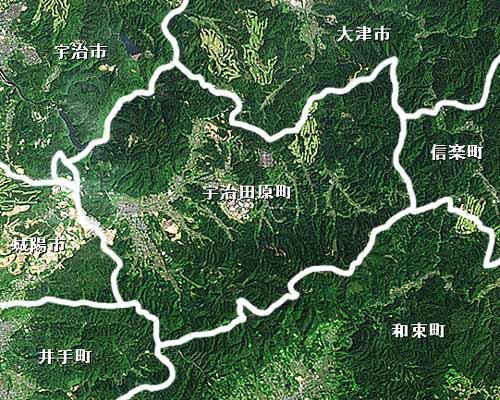
Located in the southeastern part of Kyoto Prefecture, “Ujitawara Town” is a heart-shaped town rich in natural beauty. Known as the birthplace of green tea, it boasts a long history as a producer of high-quality tea. The town is filled with beautiful scenery that changes with the seasons, and its historic temples and shrines, along with its traditional culture, are very much alive. In this town, nurtured by abundant nature, history, and tea culture, you can spend a relaxing and peaceful moment—much like a cup of tea served to welcome a guest.