Zendō-ji Temple
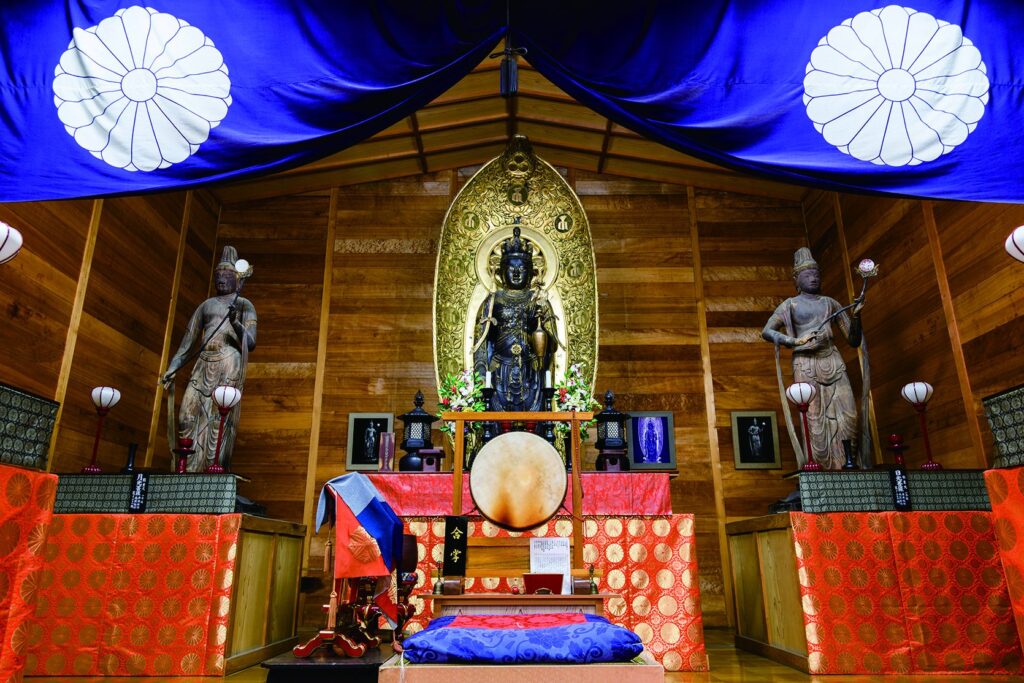
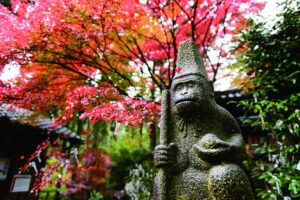
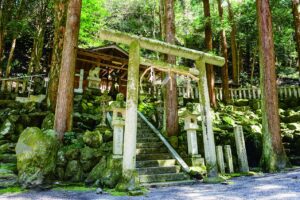
It is said to have been founded in the second year of the Shōryaku era by the monk Taira no Takashi, and that its construction took five years. As a sub-temple of Byōdō-in, it once possessed vast temple lands—including “1,000 chōbu of Mount Sōzan”—under the patronage of the Fujiwara clan; however, it fell into decline in the medieval period, and the temple grounds became increasingly dilapidated. In the 8th year of the Enpō era, Gesshū Sōko of Daijō-ji Temple in Kaga Province, with financial support from Honda Awa-no-kami Masanaga, a senior retainer of the Kaga Domain, constructed various halls, redeveloped the temple grounds, and revived the temple as a Sōtō Zen temple. Today, the temple grounds still retain much of the appearance they had at the time of Gesshū’s revival, and the Main Hall and Guest Hall remain the largest thatched-roof structures in the town. The Treasure Hall houses ten Buddhist statues, including a wooden standing statue of the Eleven-Faced Kannon, which is designated as an Important Cultural Property and a Town Cultural Property. Additionally, the temple grounds feature the Zenjō-ji Five-Story Stupa, designated as a Town Cultural Property, and a massive modern depiction of the Great Nirvana painted on the disaster-prevention wall.
The temple’s official name is Hakka Fudarakusan Kannon Myōchi-in Zendō-ji. Although it was originally founded as a temple of the Kegon sect, it currently belongs to the Sōtō sect.
It was founded in the second year of the Shōryaku era (991) by the Venerable Taira no Takashi, who served as the head priest of Tōdai-ji, and it is said that its construction took five years to complete.
It became a branch temple of Byōdō-in and, under the patronage of the Fujiwara clan, possessed vast temple lands, including “1,000 chōbu of Mount Sōzan”; however, it fell into decline from the medieval period onward, and the temple grounds became increasingly dilapidated. Amidst this decline, in Enpō 8 (1680), Gesshū Sōko of Daijō-ji Temple in Kaga Province, with financial support from Honda Awa-no-kami Masanaga—a senior retainer of the Kaga Domain who was a devout follower of Zen—constructed various halls, redeveloped the temple grounds, and revived the temple as a Sōtō Zen temple. Today, the temple grounds retain much of the appearance they had at the time of Gesshū’s revival, and the Main Hall and Guest Hall remain the largest thatched-roof structures in the town.
The Treasure Hall houses ten Buddhist statues, including a wooden standing statue of the Eleven-Faced Kannon, which is designated as an Important Cultural Property and a Town Cultural Property. In addition, the temple grounds feature the Zenjō-ji Five-Story Stupa, designated as a town cultural property, and a massive modern depiction of the Great Nirvana painted on the disaster-prevention wall. Furthermore, the Kyoto Prefectural Archives preserves the “Zenjō-ji Documents,” an Important Cultural Property that is also a valuable resource for research on the medieval period.
Reservations & Registration
- How to Register
No registration required
Basic Information
- Season
- Year-round
- Closed Days & Excluded Dates
- None (Open year-round)
- Meeting Time & Hours of Operation
- 9:00~16:00
- Duration
- About 1 hour
- Group Size
- Minimum 1 people
- Language Support
- Staff: Japanese
- Accessibility
- Not allowed
Pricing
- List Price
- Free
Access & Meeting Place
- Parking Information
- Yes
Operator Information
- Address
- 100 Zendōji-shōji, Ujitawara-chō, Kyoto Prefecture
- Phone Number
- 0774-88-4450
Area & City/Town Introduction (Ujitawara Town)
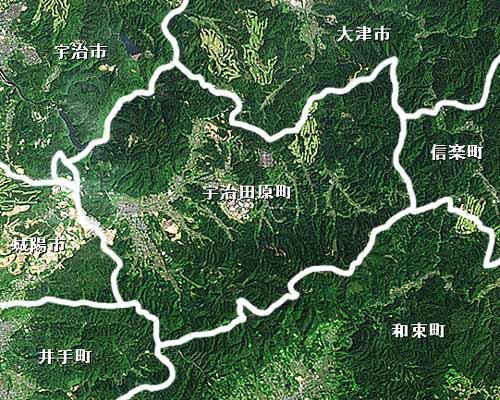
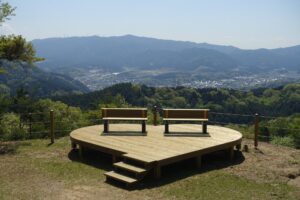
Located in the southeastern part of Kyoto Prefecture, “Ujitawara Town” is a heart-shaped town rich in natural beauty. Known as the birthplace of green tea, it boasts a long history as a producer of high-quality tea. The town is filled with beautiful scenery that changes with the seasons, and its historic temples and shrines, along with its traditional culture, are very much alive. In this town, nurtured by abundant nature, history, and tea culture, you can spend a relaxing and peaceful moment—much like a cup of tea served to welcome a guest.