The art of Japanese Knife Sharpening with Natural Whetstones〜 Learn traditional sharpening techniques and take home your own Japanese knife and natural whetstone
In Kameoka, Kyoto—the mecca of natural whetstones—experience the world of “sharpening,” a craft that has long supported Japanese culture. Learn about the formation of Kyoto’s land through natural whetstones, and gain insight into the profound depth of Japanese culture—supported by these whetstones—through hands-on experiences with Japanese swords and planing, as well as authentic kitchen knife sharpening in small groups. A day to sharpen your five senses and experience the skills and spirit nurtured by Kyoto’s climate and landscape.
A tour in Kameoka, Kyoto—a mecca for natural whetstones—that offers a glimpse into the world of “sharpening,” which has long supported Japanese culture behind the scenes.
First, you’ll learn about the geological formation of the Kyoto region, shaped by natural whetstones, and gain insight into the relationship between these stones and the precision blades that have underpinned Japanese culture—including Japanese swords, traditional architecture, and Japanese cuisine. Through a commemorative photo session holding a Japanese sword and a hands-on planing experience, you’ll also get a feel for the spirit of Japanese craftsmanship.
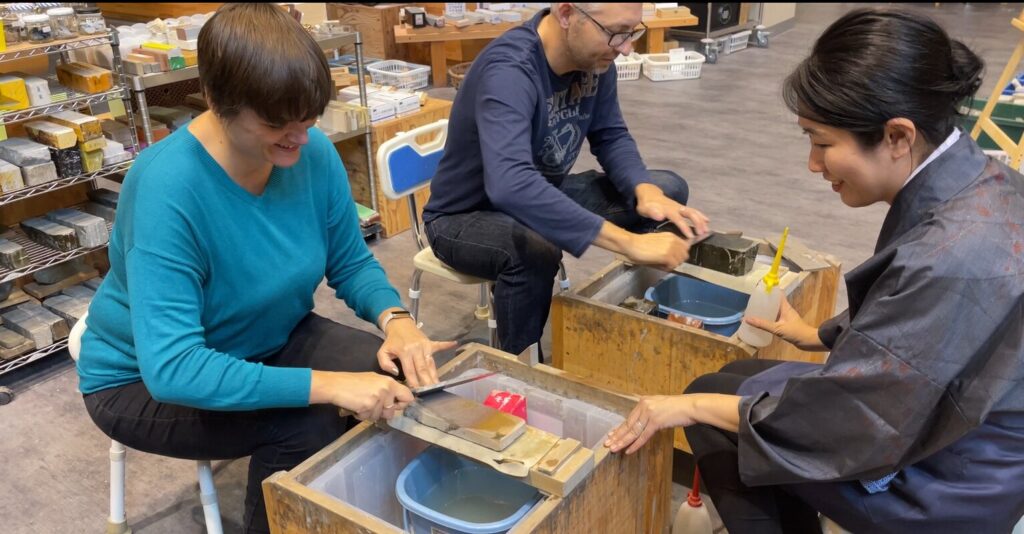
In the second half, you’ll participate in a hands-on knife-sharpening workshop in small groups. You’ll examine the structure of a kitchen knife and observe the blade edge under a microscope, then practice sharpening using natural whetstones. You can take home the hand-forged knife you’ve sharpened and the natural whetstone as souvenirs.
For those interested, we also offer a dining option where you can experience “sharpness” with all five senses—including a comparison of cutting techniques for seasonal vegetables, shaving katsuobushi (dried bonito), and making dashi broth. Please enjoy a day of learning, experiencing, and savoring the skills and spirit nurtured by Kyoto’s unique environment.
This is a one-of-a-kind day where you can sharpen your five senses while delving into the depth of the skills and spiritual culture nurtured by Kyoto’s unique environment.
Reservations & Registration
- Registration Period & Deadline
- No time limit; applications are accepted up until the day of the event, subject to availability.
- Cancellation Policy
- Up to 7 days in advance: Free; up to 2 days in advance: 30%; the day before through the day of: 100%
Basic Information
- Season
- Year-round
- Closed Days & Excluded Dates
- Every Monday through Wednesday
- Meeting Time & Hours of Operation
- Meeting time: 10:00 or 13:00
- Schedule
- 1) The Story of Natural Whetstones Nurtured by the Land of Kyoto (approx. 10 minutes)
Learn about Kyoto’s geology and the formation of natural whetstones, and discover the charm of these stones that have supported Japanese culture.
2) Japanese Culture Supported by Natural Whetstones (approx. 20 minutes)
Discover Japanese culture—including Japanese swords, traditional architecture, and Japanese cuisine—that has been supported by natural whetstones.
Experience the spirit of Japanese craftsmanship firsthand by posing for commemorative photos holding a Japanese sword and trying your hand at planing wood.
3) Small-Group Kitchen Knife Sharpening Workshop (approx. 60 minutes)
Examine the structure of kitchen knives and observe the blade edges under a microscope, then practice authentic sharpening using natural whetstones.
4) Selecting a Hand-Forged “Kuro-uchi” Knife and Natural Whetstone, and Testing the Sharpness (approx. 30 minutes)
Select a hand-forged knife and natural whetstone that suit you, then perform the final sharpening and test-cutting.
You may take home the sharpened knife and natural whetstone as souvenirs.
〈Optional, Additional Fee〉 Culinary Experience to Savor the Sharpness (approx. 60 minutes)
Through comparing cuts of seasonal vegetables, shaving katsuobushi (dried bonito flakes), and making dashi broth, you’ll experience the difference in sharpness achieved through sharpening with all five senses. - Duration
- Approximately 120 minutes (plus 60 minutes for optional activities)
- Group Size
- Minimum 2 people – Maximum 40 people
- Language Support
- Staff: Japanese,English(Portuguese on select dates)
Guide: Japanese,English(Portuguese on select dates)
English brochures available - Accessibility
- Wheelchair accessible
- Notes
- For those interested, we can arrange an optional knife-skill cooking experience and meal. Vegan and gluten-free options are available (for an additional fee).
Pricing
- List Price
- 28,000 yen
- Included in Price
- Fees for small-group tours and hands-on experiences, English-speaking guide fees, and a black-handled kitchen knife and natural whetstone as souvenirs
- Not Included in Price
- Cost of shopping at the store
Access & Meeting Place
- Meeting Place & Ticket Pickup Location
- Natural Whetstone Museum
15 Kamimae Nagano, Miyamae-cho, Kameoka City - Parking Information
- Parking for 30 cars; tour buses welcome
Operator Information
- Operator Name
- Facility: Natural Whetstone Museum; Operating Company: Kasumi-Gō Co., Ltd.
- Address
- 15 Kamimae-Nagano, Miyamae-cho, Kameoka City, inside the Kameoka City Community Center
- Phone Number
- 070-2275-1466
- Official Website
- https://www.tennentoishikan.com
Area & City/Town Introduction (Kameoka City)

Kameoka City has long been the center of Tamba Province. Toward the end of the Sengoku period, Akechi Mitsuhide built Kameyama Castle, and the city flourished as the castle town of the Kameyama Domain.
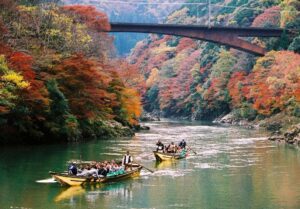
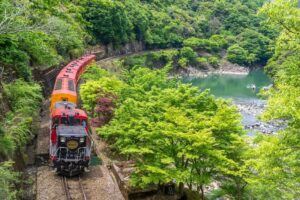
Today, the city is home to its “Three Major Tourist Attractions”: the “Hozu River Boat Ride,” the “Sagano Torokko Train,” and “Yunohana Onsen.” In addition, visitors can enjoy nature-based activities such as “rafting,” “paragliding,” and “BBQ at the River Station and Waterfront Park,” allowing you to fully experience the unique charms of this area. The area is also blessed with the charms of each season: cherry blossoms and rapeseed flowers in spring, bellflowers in summer, cosmos and autumn foliage in fall, and sea of clouds from late fall through early spring.